


Uses of XCZU4EV-2SFVC784I: A Complete Guide (2026)

July 14, 2026

Share this article

The XCZU4EV-2SFVC784I is a high-performance Zynq UltraScale+ MPSoC from Xilinx (now AMD) primarily used for multi-media and embedded vision applications. It excels in real-time 4K video processing, industrial automation, and edge computing due to its integrated Video Codec Unit (VCU) and quad-core ARM processor architecture, providing low-latency data handling in complex environments.

What makes the XCZU4EV-2SFVC784I unique?

To understand the uses of the XCZU4EV-2SFVC784I, one must first look at its hybrid architecture. Unlike a standard FPGA or a standalone CPU, this component is a Multi-Processor System-on-Chip (MPSoC). It combines a rich set of programmable logic with a powerful processing system. Specifically, the "EV" designation in the part number stands for "Embedded Video," which is the defining characteristic of this series.

Inside this chip, you will find a Quad-core ARM Cortex-A53 for application-level tasks and a Dual-core ARM Cortex-R5 for real-time safety and control tasks. This dual-processing capability allows engineers to run a high-level operating system like Linux while simultaneously managing time-critical hardware functions. However, the real star of the show for the XCZU4EV-2SFVC784I is the integrated H.264/H.265 Video Codec Unit. This hardware block allows for simultaneous encoding and decoding of up to 4K resolution at 60 frames per second, which is a significant advantage for video-heavy applications.

At Odic MG , we frequently see this part requested by designers who need to balance power efficiency with extreme processing throughput. It operates in industrial temperature ranges, making it suitable for environments that experience temperature swings from -40°C to +100°C. This robustness, combined with the 784-pin package, makes it a compact yet powerhouse solution for modern electronic design.

Industrial Electronics

Core Specifications and Performance Benchmarks

The technical capability of the XCZU4EV-2SFVC784I is best defined by its flexibility. It features approximately 192,000 logic cells, which allows for substantial custom hardware acceleration. This is particularly useful for tasks that are too slow for a traditional CPU but too complex for a simple microcontroller.

Key technical features include:

  • Processing System: Quad-core ARM Cortex-A53 up to 1.5GHz.
  • Real-Time Processing: Dual-core ARM Cortex-R5 up to 600MHz.
  • Video Support: Integrated VCU supporting H.264/H.265.
  • Graphics Processing: Mali-400 MP2 GPU for basic 2D/3D rendering.
  • Memory Support: DDR4, LPDDR4, and DDR3 interface compatibility.

Because this part is part of the Zynq UltraScale+ family, it shares a common ecosystem with other parts on our Line Card . This means software developed for smaller Zynq parts can often be scaled up to the XCZU4EV-2SFVC784I with minimal friction. The hardware flexibility is further enhanced by high-speed transceivers, which allow for rapid data movement between the chip and external peripherals like sensors or high-resolution cameras.

How is XCZU4EV-2SFVC784I used in Embedded Vision?

Embedded vision is perhaps the most common field where this specific part number is deployed. In these systems, cameras capture high-definition footage that must be analyzed in real-time. Whether it is identifying defects on a high-speed assembly line or navigating an autonomous robot through a warehouse, the latency of the video processing pipeline is critical.

The XCZU4EV-2SFVC784I uses its programmable logic to handle the initial image signal processing (ISP) tasks, such as noise reduction, color correction, and scaling. Once the image is cleaned up, the ARM processors or the GPU can run machine learning algorithms to detect objects or recognize patterns. Because the VCU can compress this video stream simultaneously, the system can also stream the footage to a central server or record it to local storage without taxing the main CPU cores.

This makes the part ideal for:

  1. Autonomous mobile robots (AMR) in logistics.
  2. High-end security and surveillance cameras with edge analytics.
  3. Medical imaging equipment for real-time surgical assistance.
  4. Drones requiring lightweight, low-power 4K video encoding.
  5. Smart city infrastructure for traffic monitoring.

What role does it play in Industrial IoT and Edge AI?

In the era of Industrial IoT (IIoT), the trend is moving away from sending all data to the cloud. Instead, companies want "Edge AI," where data is processed locally at the source. The XCZU4EV-2SFVC784I is a perfect candidate for these edge gateways. It can aggregate data from dozens of industrial sensors, perform local data fusion, and then only send relevant alerts or compressed video streams to the cloud.

This reduces bandwidth costs and improves response times. For example, in a predictive maintenance scenario, the XCZU4EV could monitor the vibration and heat of a motor while also visually inspecting the output for signs of failure. If an anomaly is detected, the real-time ARM Cortex-R5 cores can trigger an emergency shutdown in milliseconds, a feat that would be impossible if the system relied on cloud-based decision-making.

Smart Factory Automation

Can it handle Professional AV and Broadcast applications?

Yes, the inclusion of the VCU makes the XCZU4EV-2SFVC784I a staple in the professional audio-visual (AV) and broadcast industries. When broadcasting live events, there is a need for low-latency video compression to ensure that the delay between the event and the viewer’s screen is as small as possible. This chip can handle multi-channel video processing, allowing it to switch between multiple camera feeds or add graphical overlays in real-time.

In professional AV, it is often used in video-over-IP equipment, where high-resolution video is transmitted across standard Ethernet networks. The programmable logic allows for the implementation of various transport protocols, while the VCU handles the heavy lifting of H.265 compression to keep the data rates manageable. For those looking for these specialized capabilities, exploring our specialties in high-performance computing components can provide more context on how these chips fit into larger systems.

Where can you source high-quality XCZU4EV-2SFVC784I components?

Sourcing high-end components like the Xilinx XCZU4EV-2SFVC784I can be challenging, especially during periods of supply chain volatility. Because these parts are critical to high-value projects, ensuring that you are receiving authentic, tested components is paramount. This is where a trusted distributor like Odic MG becomes an essential partner in your supply chain.

We specialize in sourcing hard-to-find, long-lead-time, and even obsolete parts. Our partnerships with Manufacturer Partners allow us to navigate the complexities of the global market to find the exact part numbers you need. When sourcing the XCZU4EV-2SFVC784I, it is important to verify the exact speed grade and temperature range, as the "2I" in the suffix indicates a mid-range speed grade and an industrial temperature rating. Choosing the wrong variant can lead to system instability or premature failure in the field.

At Odic MG, we offer:

  • Free Testing on Request: Ensuring the integrity of every part.
  • Global Sourcing: Access to inventory that might not be visible on standard search engines.
  • Technical Support: Helping you identify alternative part numbers if a specific variant is unavailable.
  • Quality Assurance: Rigorous inspection processes to prevent counterfeit parts from entering your production line.

If you are currently designing a board that requires the Zynq UltraScale+ architecture or if you are facing a shortage for an existing product, you can always Request a Quote through our portal. We understand that time-to-market is critical, and we work to provide fast, reliable turnaround times on all inquiries.

Why is the 784-pin package significant for this part?

The "SFVC784" portion of the part number refers to the package type: a 23mm x 23mm Flip-Chip Fine-Pitch Ball Grid Array (FCBGA) with 784 pins. While this may seem like a technical detail, it has a massive impact on the physical design of the printed circuit board (PCB). The 784-pin layout provides a high density of I/O (Input/Output) pins, allowing the chip to communicate with a wide variety of external components simultaneously.

Designers choose this package because it offers a balance between physical size and capability. It is small enough for compact embedded systems but large enough to dissipate heat effectively when the quad-core processors are running at full tilt. Managing the thermal profile of the XCZU4EV-2SFVC784I is one of the primary challenges for engineers, often requiring dedicated heat sinks or active cooling in high-performance applications.

Electronic Engineering

Summary of Key Takeaways for XCZU4EV-2SFVC784I

The Xilinx XCZU4EV-2SFVC784I is a versatile and powerful MPSoC that bridges the gap between traditional processing and high-speed hardware acceleration. Its integrated video codec and industrial-grade durability make it a top choice for demanding modern applications.

  • Video Mastery: Built-in VCU for 4K H.264/H.265 encoding and decoding.
  • Hybrid Power: Combines ARM Cortex-A53 and Cortex-R5 cores with programmable logic.
  • Industrial Resilience: Rated for temperatures ranging from -40°C to +100°C.
  • Edge Intelligence: Ideal for low-latency AI and vision tasks at the point of data collection.
  • Reliable Sourcing: Available through specialized distributors like Odic MG to ensure quality and availability.

Whether you are developing the next generation of smart cameras or upgrading industrial control systems, the XCZU4EV-2SFVC784I provides the architectural foundation needed for success. For more information on similar components, browse our extensive list of Electronic Component part numbers or contact our team for expert procurement assistance.

Recent Posts

Intel 5M240ZT100C4N CPLD chip on a circuit board
July 17, 2026
Learn 5 ways to utilize the Intel 5M240ZT100C4N CPLD for low-power applications. Contact us for sourcing electronic components.

Close-up of electronic component date codes on a semiconductor.
July 14, 2026
Learn how to read electronic component date codes to ensure part authenticity, manage shelf life, and mitigate risks in your supply chain.
July 11, 2026
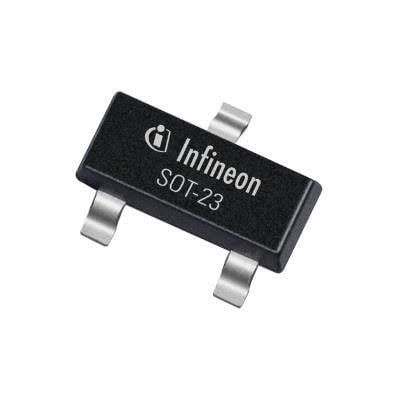
Electronic component procurement is about more than finding inventory—it's about managing risk, ensuring quality, and maintaining production continuity. When sourcing obsolete or difficult-to-find components such as the Infineon BFR193 E6327 , procurement professionals should also understand the importance of industry quality standards like AS6081 . If your organization supports legacy RF equipment or long-life electronic systems, this guide explains what the BFR193 E6327 is, where it is commonly used, and why AS6081 matters when sourcing discontinued electronic components. What Is the Infineon BFR193 E6327? The Infineon BFR193 E6327 is a high-linearity NPN silicon RF bipolar transistor designed for low-noise and broadband RF amplification. It is packaged in a compact SOT-23 surface-mount package and was intended for RF applications operating up to approximately 2 GHz . Infineon identifies the product as End of Life (EOL) , meaning it is no longer in active production. ( Infineon ) Key Specifications ParameterValueManufacturerInfineon TechnologiesPart NumberBFR193 E6327Device TypeNPN Silicon RF Bipolar TransistorPackageSOT-23Maximum Collector-Emitter Voltage (VCEO)12 V Maximum Collector Current 80 mA Transition Frequency (fT)8 GHz (typical)Minimum Noise Figure1 dB @ 900 MHzTypical ApplicationsRF amplifiers, broadband amplifiers, low-noise RF circuits The transistor was designed to provide excellent linearity and low noise, making it suitable for many wireless communication applications. ( Infineon ) Typical Applications Although the BFR193 is no longer manufactured, many legacy products continue using it. Typical applications include: RF preamplifiers Low-noise amplifiers (LNA) Broadband amplifiers Wireless communication equipment Industrial RF control systems Test and measurement equipment Signal conditioning circuits RF receiver front ends Telecommunications equipment Because many industrial and communications products remain in service for years after production ends, demand for discontinued RF transistors often continues long after manufacturers discontinue them. Product Lifecycle Status One of the first things procurement professionals should verify is the lifecycle status of a component. The Infineon BFR193 E6327 is officially classified as an End-of-Life (EOL) product. That means: New factory production has ended. Future availability depends on remaining inventory in the supply chain. Availability may become increasingly limited over time. Lead times and pricing can fluctuate significantly. ( Infineon ) For organizations supporting legacy products, this makes proactive sourcing especially important. Challenges of Sourcing End-of-Life RF Components Purchasing obsolete RF components presents unique challenges. Common issues include: Limited global inventory Increasing lead times Price volatility Counterfeit risk Inconsistent documentation Engineering redesign decisions Waiting until production inventory is exhausted often reduces available sourcing options. Why AS6081 Matters When purchasing obsolete or difficult-to-find electronic components, quality becomes just as important as availability. One widely recognized industry standard is SAE AS6081 . AS6081 establishes practices intended to reduce the risk of counterfeit electronic components entering the supply chain. The standard provides guidance for independent distributors and procurement organizations on supplier qualification, documentation, inspection, traceability, and risk management. While AS6081 does not certify individual components as "genuine," it outlines a disciplined framework for responsible sourcing. Key Elements of AS6081 Organizations that follow AS6081 principles typically emphasize: Supplier Qualification Evaluating supplier history, performance, and sourcing practices before purchasing components. Documentation Review Reviewing available documentation such as: Certificates of Conformance (when available) Lot identification Date codes Packaging information Shipping documentation Traceability Maintaining records that document the movement of components through the supply chain whenever possible. Risk Assessment Evaluating factors such as: Product lifecycle status Market availability Supplier history Pricing anomalies Component scarcity Inspection Procedures Inspection practices may include: Visual examination Packaging verification Marking inspection Dimensional verification Electrical testing, depending on organizational requirements These practices help organizations reduce procurement risk when sourcing obsolete components. Best Practices When Purchasing the BFR193 E6327 If your organization needs the Infineon BFR193 E6327, consider the following procurement steps: Verify the Complete Part Number Small suffix differences can indicate: Packaging variations Tape-and-reel configuration Compliance differences Always verify the full manufacturer's part number before placing an order. Confirm Lifecycle Status Review current manufacturer information and determine whether alternate devices are available. If production continues for your finished product, begin planning before inventory becomes scarce. Request Supporting Documentation When available, request documentation such as: Date code information Lot identification Packaging photographs Certificates of Conformance Traceability documentation Documentation supports internal procurement and quality procedures. Evaluate Alternate Components Engineering may determine that newer RF transistors provide equivalent or improved performance. When redesign is practical, alternate devices may improve long-term supply stability. Work with Experienced Sourcing Partners Obsolete RF components often require access to global supplier networks. Experienced sourcing specialists can help locate available inventory while supporting responsible procurement practices. Redesign or Continue Sourcing? Organizations supporting legacy equipment eventually face an important question: Should we continue sourcing obsolete inventory, or redesign the product? Factors to evaluate include: Remaining product life Customer support obligations Available inventory Engineering costs Regulatory requirements Long-term component availability For some products, purchasing remaining inventory is the most economical option. For others, redesigning around currently manufactured components may reduce future supply chain risk. How Odic MG Can Help Odic MG specializes in sourcing hard-to-find , obsolete , and End-of-Life electronic components for OEMs, contract manufacturers, industrial equipment manufacturers, and repair organizations. Whether you're searching for the Infineon BFR193 E6327 or another difficult-to-locate RF transistor, our team works with a global supplier network to help identify available inventory and respond quickly to urgent procurement requirements. We understand the importance of quality documentation, responsive communication, and disciplined sourcing practices when supporting legacy electronic products.

High-tech laboratory inspecting electronic components for authenticity.
July 1, 2026
Learn essential strategies for procurement professionals to identify and avoid counterfeit electronic components. Protect your supply chain with expert tips and testing protocols.

Modern electronics warehouse and supply chain management illustration
July 1, 2026
Struggling with supply chain delays? Learn how to reduce long lead times for electronic components with forecasting, local sourcing, and expert distribution strategies.

Digital representation of electronic components and supply chain risk management connectivity.
June 18, 2026
Master BOM risk management to avoid production delays. Learn strategies for sourcing hard-to-find components and managing obsolescence with Odic MG.

Aisle of stocked store shelves with colorful boxes and packaged goods in a bright warehouse-style interior
June 8, 2026
Understand responsible sourcing of electronic components. Ensure quality & reliability. Contact us for expert guidance!

Close up of electronic microchip with quality seal icon representing AS6081 standard
May 19, 2026
Learn what AS6081 is and how it protects your supply chain from counterfeit electronic components. A comprehensive guide for sourcing professionals.